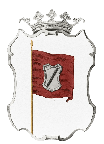
In the 15th-17th centuries, the history of Smolensk and the Smolensk region intertwined with the fates of the Lithuanian and Polish-Lithuanian states. From 1405 to 1514, the city was within the borders of the Grand Duchy of Lithuania, and from 1611, after a 21-month siege by King Sigismund III Vasa, it was annexed to the Polish-Lithuanian Commonwealth, as confirmed by the truce in Dyvilin (1619) and the peace in Polyanov (1634). Smolensk remained within the Polish-Lithuanian state until 1654, that is, for 43 years in the 17th century.
The strategic importance of Smolensk was appreciated by both Poles and Lithuanians, calling it the ‘key to Moscow’ (clavis Moscuae), as well as by the Ruthenians, naming it the ‘key to Lithuania’ (Platonov 1937: 54; Kupisz 2001: 13). At the turn of the 16th-17th centuries, Tsar Boris Godunov made the city on the Dnieper the most powerful fortress of the Moscow state. Sigismund III, restoring the fortifications of Smolensk, built the so-called Sigismund Fortress, created based on the most modern model of that time – the Dutch. The significance that the Polish-Lithuanian Commonwealth attributed to Smolensk is evidenced by the high rank of the Smolensk Voivodeship in the parliament of the Commonwealth: its officials occupied the 16th place in the hierarchy of administrative units out of 36, ahead of, for example, the Mazovian Voivodeship with Warsaw or the vast Minsk Voivodeship.
Today, when the former beauty of Smolensk in the 17th century is evidenced by the few monuments that survived after World War II, the history of literature reveals a very interesting text, important for both the past of Smolensk and the image of Polish literature. The poem Smolensk Splendor (Smoleńska zacność R
Jan Kunowski came from the Kunowski family of the Łodzia coat of arms, originating from the Poznań Voivodeship. The Kunowskis, like a significant part of the minor nobility from the western and central regions of Poland, linked their hopes for social development with the eastern territories of the Commonwealth and in the second half of the 16th century settled in the Mozyr region of the Minsk Voivodeship. The youth of Jan Kunowski, born in the last decade of the 16th century, is unknown. The first documented fact of his life is his participation in the liberation of Smolensk in 1615-1616 in a hussar detachment led by Alexander Gosevski. This event was immortalized by Kunowski in the poem The Liberation of Smolensk (Odsiecz Smoleńska, 1617). In the 1620s, he was appointed a deputy to the Lithuanian Tribunal by the nobility of the Mozyr region (1621), served under Gosevski in the lost defensive war for Livonia (1621-1622), which he presented in the poem The Livonian Expedition of 1621 (Ekspedycyja inflantska 1621 roku). For his efforts, the soldier-poet was rewarded by Prince Władysław (then the governor of the Smolensk land) with the position of starost and captain of Chernihiv (1622), and also received from the king the estate of Volyntyki on the Volynka River in the Chernihiv principality (1626). This period dates the Smolensk encomium Smolensk the Magnificent (Zacny Smoleńsk), written in 1628, and in the final authorial edition of 1640 renamed to The Magnificence of Smolensk (Smoleńska zacność). Kunowski’s landowner-bureaucratic lifestyle was interrupted by the Smolensk War (1632-1634). His participation in it resulted in the emergence of occasional works (Fragment of the Siege of Smolensk [Fragmenta oblężenia smoleńskiego], Complaint on the Intensification of the Siege of Smolensk [Na angaryją oblężenia smoleńskiego uskarżanie], On the Moscow Military Conquests during the Liberation [Na moskiewskie manubije czasu odsieczy], On the Royal Triumph in the Liberation of Smolensk [Na tryumf krуlewski z odsieczy smoleńskiej]), as well as the assignment of the title of royal secretary to Kunowski by King Władysław IV (1634). In this role, he participated in an embassy to Moscow (1636), where the implementation of the provisions of the Polyanov peace was discussed; in 1636-1637, he participated in a commission determining the course of the border between the two states. Evidence of Kunowski’s popularity in the Smolensk land was his election as a deputy to the Lithuanian Tribunal from the Smolensk region (1636). We also find the royal secretary in the commission establishing the borders of the Smolensk and Chernihiv voivodeships (1639), as well as in the Polish-Russian commission regarding Jan Faustyn, allegedly the son of Tsar Dmitry the Pretender (1644). Following the death of his patron, the Smolensk voivode Alexander Gosevski, Kunowski wrote several occasional works and collected the others, dedicating the entire manuscript collection to the son of the deceased (1640). The last known knightly event in the life of the author of Smolensk Splendor was the command of a private infantry detachment of the Grand Lithuanian Hetman Janusz Kiszka (1648). Towards the end of his life, the poet moved to the central regions of the Grand Duchy of Lithuania; in 1651-1652, he was a deputy to the Lithuanian Tribunal from the Lida region.
A description of Kunowski’s life would be incomplete without considering his confessional affiliation. The royal secretary was a Calvinist, and his involvement in the affairs of the Reformed Evangelical Church is documented by his three-time election as the secular head of the provincial synod of the Lithuanian Unity (Jednota Litewska – 1636, 1649, 1654), as well as his confrontation with the Catholic clergy in 1627-1628, when Kunowski opposed the handing over of the Smolensk Church of Boris and Gleb to the Dominicans; only the direct order of the then-king Władysław led to the resolution of the dispute in favor of the Dominicans. These facts to some extent explain why this respected soldier and excellent connoisseur of Eastern affairs did not make a brilliant political career. The last known date from his biography for historians is 1654, when he was elected head of the synod of Calvinists, which symbolically intertwines with the loss of Smolensk by the Commonwealth, the city to which Kunowski dedicated his best works.
‘Praise of the City’ (laus urbis) appeared in the Middle Ages. In one of Theocritus’s idylls titled Syracusans Admire the Splendor of Ptolemaic Alexandria, the hero of the Aeneid admires the beauty of the building Carthage. The genre of laus urbis, pertaining to expressions of praise (genus demonstrativum), owes its existence to Statius, who in numerous occasional works contained in the collection Silva presented the power of Rome, more precisely the beauty of villas located above the Bay of Naples. The codifier of the poetic practice of these and other creators of ancient literature who wrote laudes urbium was Marcus Fabius Quintilian. In his treatise Institutio oratoria, he confessed that the description of a city should consist of praise for its founder, the antiquity of the city, its location and fortifications, the virtues of its citizens, and public buildings (Lausberg 2002: 140-141, § 247). Following Quintilian, Renaissance theorists recommended praising the architecture of cities (including houses, churches, bridges, towers) and indicating them as centers of science and art (Juliusz Cesar Scaliger 1561: 166-167).
In the history of literature, the most frequently described symbolic city was Rome. Laudes Romae, written in the language of Cicero, were not only produced by Romans, but already in the 17th century, they formed entire anthologies (Justus Lipsius 1675). Along with the emancipation of national languages and the sense of the value of national culture during the Renaissance, praises of other cities in Europe began to appear, written in national languages. Probably the first description of a city written in a Slavic language is Praise of the City of Dubrovnik by the Croatian poet of the early Renaissance Hanibal Lucić (Hanibala Lucicia, 1485-1553; cf.: Goleniszczew-Kutuzow 1970: 109). Polish laudes urbium appeared in the Middle Ages, with the precursor of Latin works on this theme being Stanisław Ciołek, who lived at the turn of the 14th and 15th centuries, the author of the encomium Cracovia civitas…. Medieval and Renaissance works praising Polish cities are most often topographical in nature, that is, digressions woven into the course of historical or biographical narrative. They are usually written in Latin (Buszewicz 2004: V-XV, 29-31). Only Baroque writers, an era that transcended previous boundaries of art in terms of themes and the status of the addressee (reader, viewer, or listener), became the authors of the first praises of cities in Polish culture in their native language.
They began to appear already in the early 17th century. An anonymous author of the Sowiźrzał literature placed a poetic praise of two towns near Kraków in the Sowiźrzał Calendars (Minucyje sowiźrzałowe, which appeared most likely in the first or second decade of this century) (Grzeszczuk 1985: 265-268) [4]. In accordance with the rules of encomium, we encounter praise of urban buildings, churches, and the organs located within them; the author also writes about the wealth and goodwill of the townspeople. However, in these portraits of ideal cities, it is not difficult to notice satirical traits; their exaggerated praise serves to create a humorous effect. The anonymous poet makes the excess of literary consciousness explicit, the ironic-comic discrepancy between poetics and theme: “My eye has seen this / Though it may have embellished a bit” (Dębica [Dębica]), verses 43-44). Only in 1643 did Adam Jarzębski, a composer, architect, and poet, publish Gościniec, or A Brief Description of Warsaw (Gościniec abo Krótkie opisanie Warszawy) – a poetic praise of the capital, conceived as a collection of descriptions of famous Warsaw buildings (Jarzębski 1974).
Against this background, the encomium Smolensk Splendor written by Jan Kunowski 15 years earlier appears, once again, as the first praise of a city in the Polish-Lithuanian Commonwealth. In accordance with the recommendations of poets from antiquity and the Renaissance, the author praises Smolensk from the perspective of its antiquity (verses 41-47), the military feats of its inhabitants (verses 48-60), discusses the history of the city in the 17th century (verses 61-72), elaborates on the description of the fortifications (verses 73-88), advantageous geographical location (verses 89-112), and the history of the Smolensk wars in the 17th century (verses 113-192). The praise is complemented by a description of the Sigismund Fortress (verses 193-212), mentions of churches, the town hall, the voivode’s palace, and the Dnieper Gates (verses 213-232), while the last stanzas contain praise for the Smolensk land, compared to the biblical land of honey and milk, a land more beautiful and richer than the island of Rhodes or Mytilene (verses 233-252).
The encomium to Smolensk was written from the perspective of a Pole and a knight. Kunowski omitted the history of the Smolensk Principality before the conquest of these lands by Vitold, instead highlighting the courage of the inhabitants of Smolensk – loyal citizens of the Grand Duchy of Lithuania – during the battle with the Teutonic Knights at Grunwald (1410). The annexation of the city to the Moscow state in 1514 occurred, in his opinion, due to the betrayal of Mikhail Glinsky, and the spectacular construction works to strengthen the fortress, conducted under the guidance of Boris Godunov, were interpreted by Kunowski as a desire to retain foreign land. In turn, the siege of Smolensk by Sigismund III was understood by the poet as the implementation of a policy of reclaiming lost lands. It is significant that in Smolensk Splendor, the author dedicated much space to the battles of Alexander Gosevski to lift the Moscow blockade in 1613-1616; these fragments are an expression of Kunowski’s vassal connection with the hetman [5]. It is also worth noting that the poet did not follow Quintilian’s advice to praise the city ‘from the perspective of its inhabitants’ (ex civibus), and in the description of buildings, he did not mention churches. Even the name of one of the city gates in the poem bears an ideologized name – the Royal Gates, although for the population they were the Dnieper Gates – yet the fact of adorning the building with the icon of the Smolensk Mother of God was omitted. The author consciously creates an image of Smolensk as a fortress of the Polish-Lithuanian Commonwealth, abstracting from the question of Orthodoxy (an inexperienced reader might think that the city is inhabited only by Catholics attending services in five churches). In Kunowski’s understanding, the city, obtained with God’s help and held with such great efforts, should remain within the borders of the Polish-Lithuanian state, moreover – it should be the starting point for further political and economic expansion (verses 105-112).
The author’s blending of ideology with history, interpretation with description (which is also found in contemporary works of historians and literary scholars) can have cognitive value for the modern reader. Smolensk Splendor is an expression of the mentality of the Polish nobleman of the 17th century, confident in the providence that protects the Commonwealth, subordinating historical reflection to the idea of providentialism, convinced of the special mission of the Polish-Lithuanian state. At the same time, in Kunowski’s encomium, there is a genuine, sincere admiration for the greatness and power of Smolensk, its defensive virtues, and economic prospects. The poet turned to ancient, biblical motifs and historical erudition (referring to the historian Martin Cromer) to embellish the praise of the city. Even the use of the sapphic stanza – an unsuitable meter for descriptive poetry – had aesthetic significance in his design. This aspect intertwines in Smolensk Splendor with the description of personal observations. According to the historian, “one of his (Kunowski’s) main principles, used throughout his life, was the description of events of which he was a witness,” his literary credo he expressed in a lapidary sentence: “Be satisfied with what my eye has seen”[6].
The work presented below thus appeared at the intersection of ideology and description, as an expression of the imperial aspirations of the Polish-Lithuanian Commonwealth and as a testimony of admiration for Smolensk. It contains the truth of a document (mentality; history, visible through the eyes of a Polish nobleman of the 17th century) and, perhaps most importantly – the truth of feelings. With this thought, we hand it over to the reader.
Bibliography
Platonov 1937: S.F. Platonov, Essays on the History of the Time of Troubles in the Moscow State of the 16th-17th Centuries, Moscow, 1937.
Kupisz 2001: D. Kupisz, Smolensk 1632-1634, Warsaw 2001.
Teodorowicz-Hellman 2006: E. Teodorowicz-Hellman, From the History and Present of the Skoklostersamlingen Collection, in: E. Teodorowicz-Hellman, A. Nowicka-Jeżowa, M. Straszewicz, M. Wichowa, Polonika in the Collections of the National Archive of Sweden (Riksarkivet) Skoklostersamlingen, Warsaw 2006, pp. 10-15.
Kacprzak 2006: The Smolensk Case. From Occasional Literature of the First Half of the 17th Century. From the Collections of the National Archive of Sweden Skoklostersamlingen, ed. M.M. Kacprzak, Warsaw 2006.
Jeżowa, Hellman 2007: Polonika in the National Archive of Sweden. The Skokloster Collection and Other Collections, ed. A. Nowicka-Jeżowa, E. Teodorowicz-Hellman, Stockholm 2007.
Kunowski 2007: J. Kunowski, The Livonian Expedition of 1621, ed. W. Walczak, K. Łopatecki, introduction K. Łopatecki, Białystok 2007.
Lausberg 2002: H. Lausberg, Literary Rhetoric. Foundations of Knowledge about Literature, translated and ed. A. Gorzkowski, Bydgoszcz 2002.
Juliusz Cesar Scaliger 1561: Juliusz Cesar Scaliger, Poetices libri septem, 1561.
Justus Lipsius 1675: Amiranda sive de magnitudine Romana; Opera omnia, III, Wesel 1675.
Goleniszczew-Kutuzow 1970: I. Goleniszczew-Kutuzow, The Italian Renaissance and Slavic Literatures, translated by W. and R. Śliwowscy, introduction by J. Krzyżanowski, Warsaw 1970.
Buszewicz 2004: Metropolis of the Sarmatians. Former Poets and Writers about Kraków, ed. and introduction E. Buszewicz, Kraków 2004.
Grzeszczuk 1985: Anthology of Sowiźrzał Literature, ed. S. Grzeszczuk, Wrocław 1985.
Jarzębski 1974: A. Jarzębski, Gościniec abo Krótkie opisanie Warszawy, ed. W. Tomkiewicz, Warsaw 1974.
Łopatecki 2007 K.Ł. Łopatecki, Introduction, in: J. Kunowski, The Livonian Expedition of 1621, Białystok 2007, pp. 13-106.
[1] Translation from Polish by M.M. Tsybulsky and E.S. Vorobyova.
[2] See Kacprzak 2006: 25-32. In this collection, the researcher also published five other works by Kunowski thematically related to Smolensk. The result of previous research and critical works of the entire collection is the volume Jeżowa, Hellman 2007.
[3] In addition to the aforementioned poem, researchers published other unpublished works by Kunowski.
[4] The quote below is taken from this publication.
[5] According to Karol Łopatecki, the addressees of the poem are primarily Sigismund III and Prince Władysław. See: Łopatecki 2007: 33.