The population of the Sebezh district in 2008 was 25.3 thousand people. The town itself has a population of 6.5 thousand. I believe that anyone who has been to the “Friendship” Mound, located at the border of three countries – Russia, Latvia, and Belarus, has already had the opportunity to get acquainted with the features of the surroundings of this unique natural region. The mound was erected by members of the partisan movement as a memorial to World War II. Events are held at this site every year.
However, we will not talk about World War II today, as there are many monuments dedicated to that time throughout Pskov region. Let us return to present-day Sebezh. What impressed me personally. First of all, the urban development around the church, the lanterns on the waterfront, the brick architecture, and the hilly terrain, which gives the town a fairy-tale atmosphere from the water level.
The unique nature of the Sebezh district was recognized by the Pskov authorities, and in 1996, the “Sebezh” National Park was established on its territory. The area of the park is 50 thousand hectares, of which 31 thousand is covered by forest, and 7 thousand is water. There are 86 lakes within the park! The uniqueness of this place is enhanced by the arrangement of the lakes, as they are located so close to each other that they are connected only by short streams, and from a bird’s-eye view, it looks like a bunch of grapes.
The largest lakes are considered to be Necharytsa and Sebezh, while Voron and Osinaye can also be called quite large. There is a hypothesis that through these streams and lakes ran one of the possible routes of the way from the Varangians to the Greeks. By the way, local historians say that it is still possible to walk this route today without any problems.
Regarding celebrities and curiosities related to the city, the official city page reports that the Soviet director Eisenstein presented Stalin with a plan to build a film studio in the vicinity of the city that would rival Hollywood, but the plan was rejected as Stalin had other ideas.
The period of the 16th – 18th centuries was a time of continuous wars between the Grand Duchy of Lithuania and Muscovy (the Grand Duchy of Moscow). This is a very interesting time from a historical point of view, as many historical documents remain, at least concerning the establishment of borders. Special Lithuanian-Moscow bilateral commissions were often created.
And although military clashes did not cease, there was time for constructive actions. Thus, on March 20, 1625, during a shaky truce, King Sigismund laid the foundation for a wooden Catholic church on the site of the former women’s monastery, after which in 1649 Jeronim Radziwill built a brick building on the site of the burned wooden sanctuary. In 1654, Sebezh again passed to Muscovy. Researchers report that at that time the sanctuary may have been used as an Orthodox church, as evidenced by a number of minor modifications. In 1673, Sebezh returned to the Grand Duchy of Lithuania, where it remained until 1772, until the first partition of the Polish-Lithuanian Commonwealth.
In 1917, the church was closed. The subsequent history is a sad story of the destruction of the temple: the roof disappears, part of the porch, all the wooden interior, and so on. Later, in the 1960s, a boarding school opened there. However, the most important thing is that unlike Nevel and Velizh, where not a single church has survived, Sebezh was truly fortunate, as despite its destroyed state, the building was saved, and in 1990, the Orthodox Church of the Holy Trinity opened in the church building, which operates to this day.
Also worth visiting is the building of the editorial office of the district newspaper “Prizyv” on Soviet Street – with very characteristic walls made of local glacial boulders, crowned with brickwork at the corners.
Another attraction is the development around the church, consisting of beautiful wooden houses. They, like mushrooms, cling to the hill of the former church, in the building of which the Orthodox church is now located. This accumulation looks simply perfect, especially in foggy weather.
Very interesting observations were recorded by researchers during folklore expeditions since 2000. This study notes that, due to the absence of a Christian sanctuary for more than 70 years, local people until the 1990s had to independently determine the time and manner of celebrating religious holidays. Researchers also note a strong Belarusian influence, which is manifested in the peculiarities of organizing during the holidays the so-called “bryksy” – noisy folk festivities in which both “old and young” participate.
For Christmas, in the vicinity of Sebezh, they prepared their traditional dish – kishki. And in the morning, instead of carolers, “Christoslavtsy” walked around the village, who, unlike carolers, did not ask for anything in return for their singing; they simply wished prosperity to the hosts in the new year. The carolers appeared in the evening, their faces were intentionally smeared with soot, they wore old clothes and sang under the windows, waiting for a treat from the hosts.
Before the trip, I recommend visiting the pages:
Sebezh Local History Museum: http://www.siebiez-museum.narod.ru/
The official page of the city of Sebezh http://www.sebezh.ru/
National Park “Sebezh”
You can reach Sebezh by the regular bus from Novopolotsk – St. Petersburg or Minsk – Pskov. You can stay at the municipal hotel “Sebezh” or the private hotel “Pribaltiyskiy”. If you are a lover of pristine nature and have traveled to visit the “Sebezh” National Park, I recommend staying in one of the guest houses in the park area: “Midino”, “Rudnya”, “Fisherman’s House”.
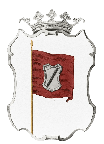
By the way, Sebezh, like the previous cities we talked about – Velizh and Nevel, has preserved the Pursuit in its city coat of arms.
Listen to the release “The Lake Region of Sebezh”
Prepared by Vladimir Mikhnevich